Peaceful Valley's Bus Route Splits This September. The Backup Plan Still Isn't Open.
August 27, 2026
August 27, 2026
"It will be difficult for riders to climb the stairs from Peaceful Valley to access service on Riverside Avenue."
That line sits buried in a public comment inside Spokane Transit Authority's own 2026 Service Revisions Final Report, filed by a rider who lives in the neighborhood and knows exactly what the agency is proposing to trade away. It is a small sentence about a specific staircase, but it points at something bigger: two separate decisions, made a year apart by two different agencies, are about to land on Peaceful Valley in the same month. Neither decision was designed with the other in mind. Together they change how a few hundred households actually leave their neighborhood.
If you live down here, along Clarke or Main or Water Avenue, you have probably heard pieces of this. The transit survey came through the neighborhood council last winter. The stairs have been barricaded for a while. What may not have connected yet is that the fix nobody built and the change everybody voted on are arriving at the same time, and the second one assumes the first one exists.
Spokane Transit Authority's Route 20, the loop that currently runs from downtown out to Spokane Falls Community College, has operated on a 15-minute frequency by alternating buses between two paths: one through Peaceful Valley on Clarke Avenue, one along Riverside Avenue through Browne's Addition. STA's Planning and Development Committee proposed collapsing that split routing back in October 2025, and the agency finalized the plan in its March 2026 service revisions report. Here is what actually changes on the ground:
None of this is a maybe. STA CEO Karl Otterstrom's office moved the plan from proposal to final report in March, and the target date STA and local coverage have both pointed to since the draft stage is September 2026. That is next month, close enough that anyone still riding the 20 out of habit needs a new plan now, not later.
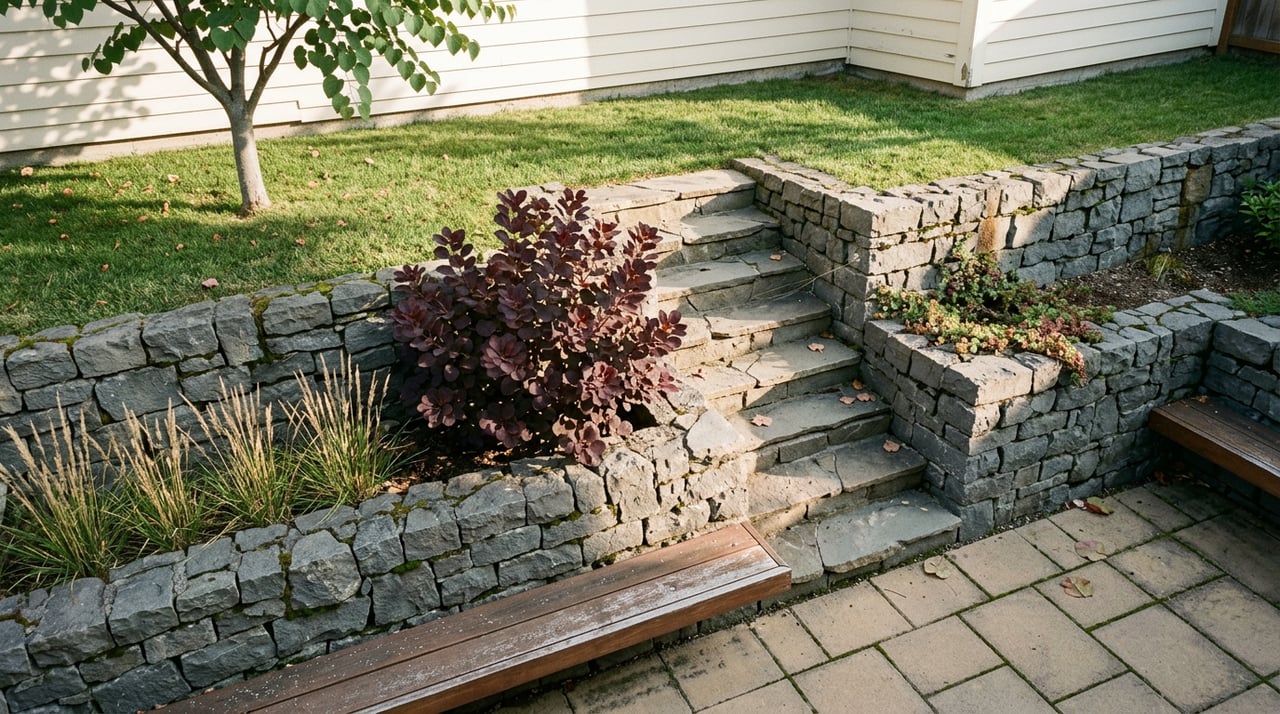
Here is the part that turns a routine service adjustment into an actual access problem. STA's own reasoning for cutting the Clarke Avenue stops leans on the assumption that residents can walk up to the new Riverside Avenue stops instead. Peaceful Valley sits below Browne's Addition and downtown, separated by a steep bluff, and the two pedestrian shortcuts up that bluff are the Spruce Street stairway and the Cedar Street stairway.
Spruce Street has been closed for what the Spokesman-Review's transit coverage described as an indefinite stretch, the result of disrepair severe enough that a 2024 neighborhood petition documented rotting boards and broken handrails on the structure. That petition is still open. It has not resulted in a rebuild timeline from the city. When STA collected public comment on the Route 20 plan through the winter, riders were still referencing the closure directly, one describing the choice as having to "climb dangerous stairs (if they are even open), or climb up steep hills" to reach Browne's Addition or downtown. Another comment, from someone who identified as a Peaceful Valley resident, put it more plainly: walking up to Riverside would be difficult, more so in winter, with a long uphill walk on Main Street as the only other option.
The workaround, for now, is Cedar Street. That stairway remains open and connects up toward Riverside near the Peaceful Valley Community Center at 214 North Cedar Street, which is also where the neighborhood council still meets on the second Thursday of most months. It is a real path. It is also the only one, since Spruce isn't available and the graded street route means a genuine hill climb either way.
So the honest read on September's change is not simply fewer buses. It is fewer buses, routed to a stop that depends on a stairway the city has not committed to reopening, with a second stairway carrying all of the foot traffic that the first one used to share.
None of this touches the reasons people actually chose Peaceful Valley in the first place, and it is worth being precise about that too, because the neighborhood's daily rhythm has nothing to do with which bus stops where.
Redband Park still runs along the river with its paved walking path, ballfield, and the small boat launch that kayakers and anglers use through the warm months. Peaceful Valley Park still sits tucked under the Maple Street Bridge with its basketball court and fenced soccer area, a spot that reads almost hidden if you don't already know it's there. People's Park still connects the riverfront trail system out to the Centennial Trail and, eventually, Riverfront Park itself, which means the walking and biking loop that makes this neighborhood feel disconnected from downtown traffic in the best way is untouched by any of this.
And the neighborhood still has Peaceful Valley Coffee Co., the micro-batch roaster at 1605 West Water Avenue that founder Bryn Garrehy built after moving back to the neighborhood he grew up in. It is a small operation, roasted to order rather than stocked on shelves, and it is the kind of business that only exists because someone had a specific, personal reason to plant it in this specific place. That is Peaceful Valley in a sentence: quiet on purpose, walkable by design, and small enough that a single roastery or a single staircase actually matters to how the place functions.
If you ride the 20 regularly, plan around a 30-minute window instead of 15 starting next month, and expect your boarding point to move to Riverside Avenue rather than Clarke. If getting there on foot means climbing to Riverside, use Cedar Street, not Spruce, until the city says otherwise. If you have a Route 33 transfer that currently rides through on the same bus without changing seats, expect that to break once the interline changes, since STA has confirmed riders will need to transfer at Spokane Falls Community College going forward instead of staying on board through the flip to Route 20.
None of this changes what Peaceful Valley is. It changes how you get out of it on a Tuesday morning, and for a neighborhood this size, tucked between the river and the bluff with only two ways up the hill, that is not a small thing to get wrong.
If you're weighing what a neighborhood like this is worth right now, whether you're already here or watching from a few blocks away in Browne's Addition or Kendall Yards, the Bill Richard Group has spent decades tracking how access, terrain, and small local decisions like this one shape day-to-day life across Spokane's neighborhoods. If you're curious what any of that means for your own address, a free home valuation is a good place to start the conversation.
Stay up to date on the latest real estate trends.
Our vision was to create a group of specialists that would provide exceptional and efficient service, second to none. With a strong emphasis on home staging, our consultative approach to the selling and buying of homes has served our clients well.